
Challenges in practice
Whether it's a new part, a tool change, or a process adjustment at the supplier's site, initial sample inspection is often required. Creating standard-compliant initial sample inspection reports according to customer-specific or industry-specific requirements necessitates that the supplier's results are fully, structurally, and auditably documented.
In practice, however, initial sample inspection reports are frequently transmitted via email or separate file repositories. Measurement results are transferred manually, documents are sent multiple times, and internal cross-checks require considerable coordination. These media breaks and a lack of transparency hinder traceability—especially during audits.
Furthermore, supplier integration must be simple and online. Complex cloud access, additional installations, or error-prone replication mechanisms are neither efficient nor conducive to acceptance.
Therefore, a solution is needed that integrates suppliers into the initial sample inspection process in a structured manner, enables internal cross-checks, and fulfills all documentation requirements in accordance with standards—fully digitally and without system breaks.
Solution QS1
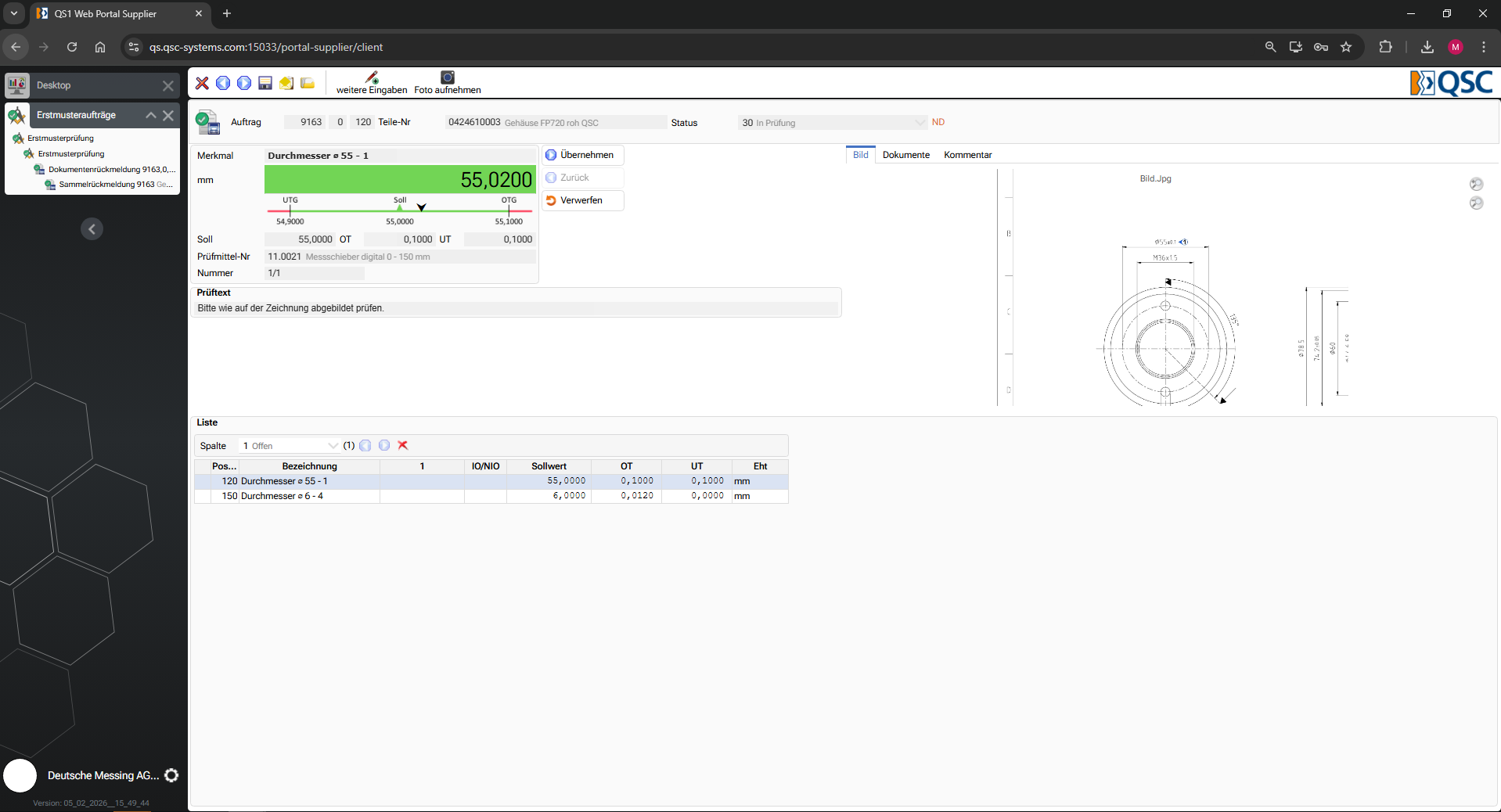
Through the browser-based QS1 supplier portal, you provide your supplier with all relevant testing specifications for initial sample inspection – including drawings, CAD data, and defined test characteristics. The supplier records their measurements directly in the system and uploads the required initial sample inspection documents in a structured format.
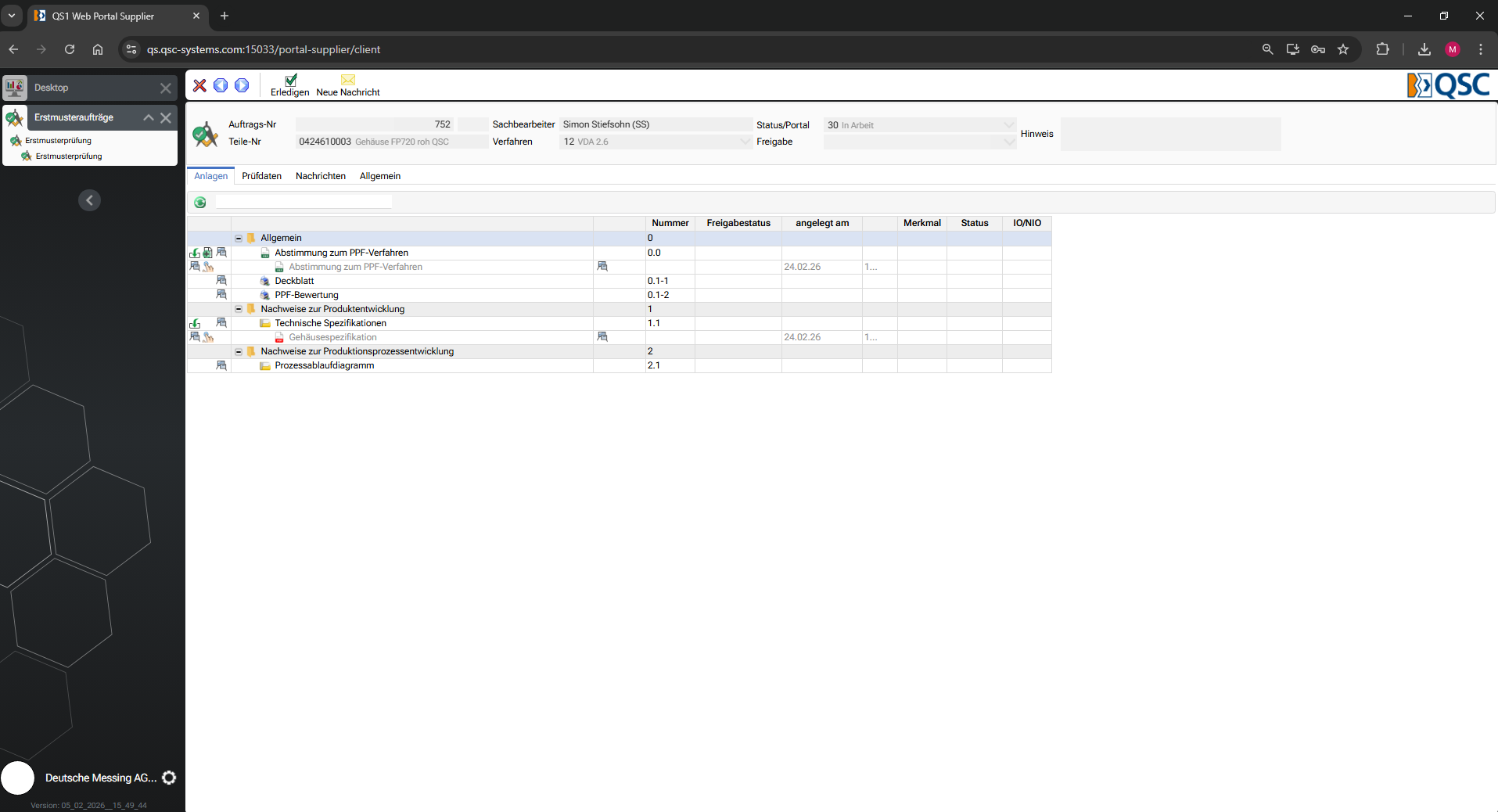
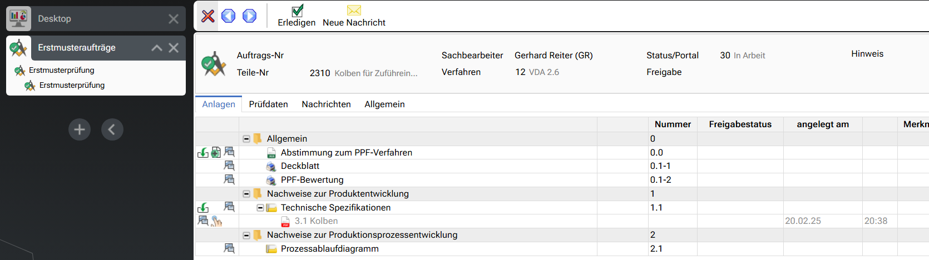
Workflow-driven document control ensures that all attachments are versioned, approved, and archived in a revision-proof manner. This results in complete and standards-compliant documentation of the entire sample inspection process.
Internal cross-checks can be directly compared with the results recorded by the supplier. Deviations are communicated directly via the integrated corrective action management system and processed transparently in the portal. Both internal and external stakeholders have access to the current status and processing stages at any time.
Through the integration of relevant ERP data—such as purchase orders or goods receipts—the supplier has all the necessary basic information for sampling at their disposal.
The result is a seamless, transparent, and auditable ISIR process—efficiently managed, clearly documented, and fully integrated into your QS1 system landscape.
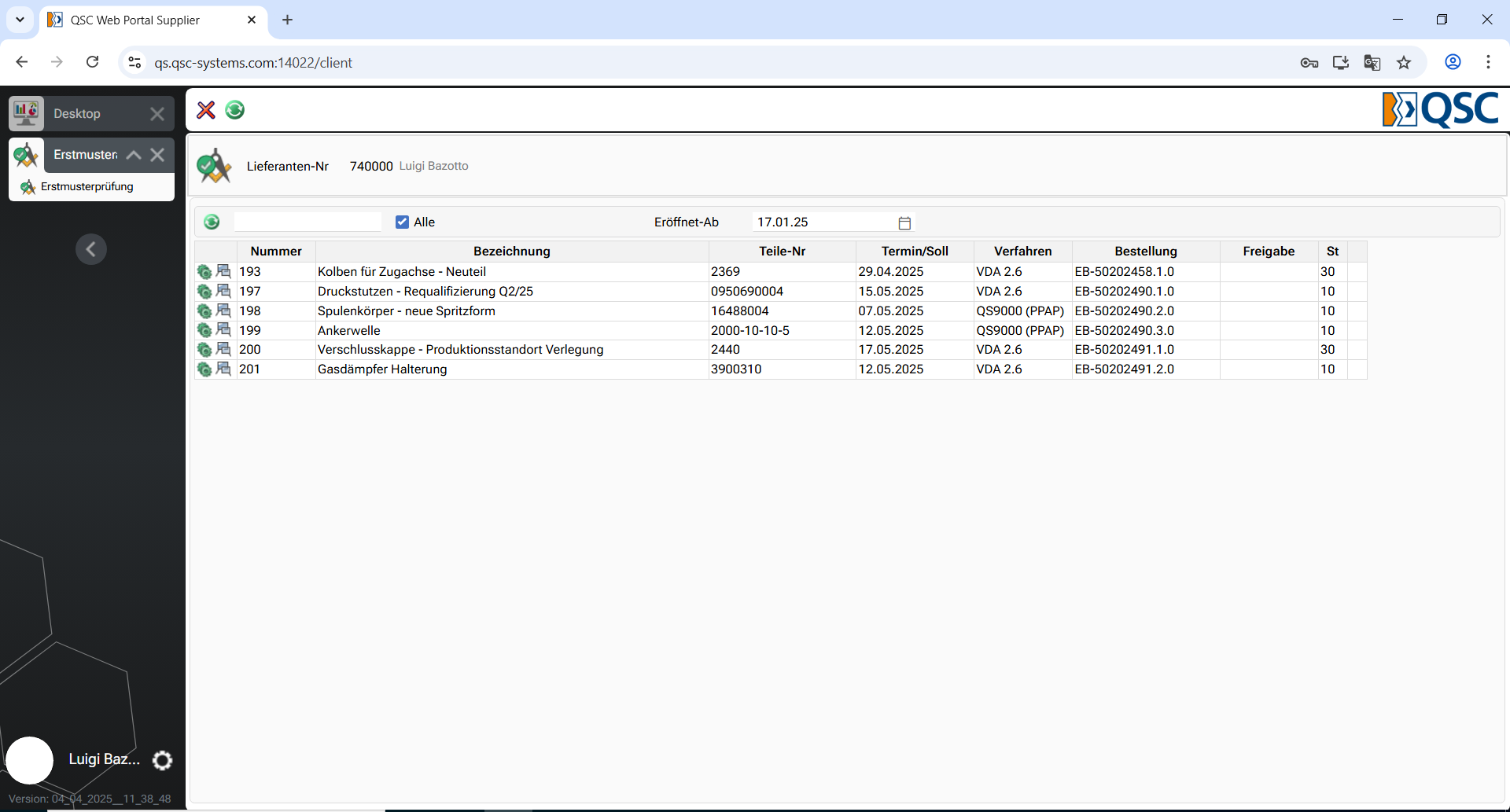
- Browser-based supplier integration without installation or complex IT infrastructure
- Structured provision of all inspection specifications, including drawings and CAD data
- Direct recording of measurement data by the supplier in the system
- Upload and audit-proof management of all EMPB documents and attachments
- Workflow-driven approval and document control
- Mirroring of internal cross-checks with supplier results
- Direct communication of deviations via the integrated corrective action management system
- Transparent status tracking for internal and external stakeholders
- Integration of relevant ERP data such as purchase orders and goods receipts
Does this sound familiar?
- Initial sample inspections are clearly regulated by standards, but operationally cumbersome: measurement results, test reports, and attachments arrive via email or file storage, are manually transferred, and are difficult to maintain consistency.
- Documents are sent multiple times, versions diverge, and it is not possible to clearly demonstrate during audits which document was valid when and on what basis it was approved.
- Test specifications are not unambiguous: drawings, CAD data, and test characteristics are scattered; the supplier works with "their" version, while internal checks are performed against "a different" version.
- Internal cross-checks generate a high coordination effort: results must be compared, deviations tracked, and queries clarified, often without a clear status logic and without a complete history.
- Supplier integration fails due to unnecessary IT complexity: additional access points or installations reduce acceptance and speed.
This should be achieved through a robust process
- Structured, digital supplier integration: easy portal access via browser, clear roles/permissions, no installation required.
- Clear and up-to-date inspection specifications: drawings, CAD data, and defined inspection characteristics must be provided centrally so that all participants work with the same version.
- Direct measurement data acquisition at the source: measurement data should be recorded where it is generated (structured, plausible, without subsequent transmission).
- Audit-proof document control: EMPB documents and attachments must be versioned, approved, and archived in an audit-proof manner, including a complete history.
- Integrated cross-checking and deviation management: internal mirror checks, deviations, corrective actions, deadlines, and status must be transparent for both parties and processed within the same workflow.
Coverage in QS1
- Provides all testing specifications for initial sample inspection in a structured format via the browser-based QS1 supplier portal, without installation or complex IT infrastructure. This includes drawings, CAD data, and defined test characteristics.
- Enables suppliers to directly record measurement data in the system and to submit all required initial sample inspection documents and attachments in a structured manner via upload functions.
- Ensures standards-compliant documentation through workflow-driven document control: versioning, approvals, and audit-proof archiving are handled system-wide and are fully traceable.
- Directly mirrors internal cross-checks against supplier results; deviations are communicated and assigned directly via the integrated corrective action management system and processed transparently within the portal.
- Integrates relevant ERP information such as purchase orders and goods receipts, ensuring that the basic data and context for sample inspection are fully available.
- Links external supplier sampling with internal initial sample inspection: Supplier results, counter-checks and approvals are structured and integrated into the central EMPB process, forming the basis for standard-compliant initial sample inspection reports.
Your Result: Significantly less administrative effort, no manual data transfer, consistent testing specifications and document versions, faster coordination through integrated cross-checking, audit-proof EMPB evidence and a continuous, digital sampling process without system breaks.
Your Advantages
- Significant reduction in administrative effort in the ISIR process
- Elimination of email communication and manual data transfer
- Structured and complete initial sample inspection reports according to standards
- Faster coordination between internal testing and suppliers
- Higher data quality through direct input by the supplier
- Audit-proof and transparent documentation of all steps
- Clear allocation of responsibilities in the sampling process
- Accelerated approval processes through digital workflows
- Improved collaboration with suppliers on an equal footing
- Seamless integration into your existing QS1 system landscape
