
Challenges in practice
The foundation for robust, production-ready products is laid in the early stages of product and process development. Particularly in the automotive sector, companies are obligated by requirements such as AIAG and VDA standards to consistently implement structured methods of Advanced Product Quality Planning (APQP).
A comprehensive APQP process is therefore essential for identifying risks early, systematically ensuring maturity levels, and reliably meeting the increasing demands of OEMs and supply chains.
Solution QS1
With QS1 APQP, you can digitize and structure your advanced quality planning.
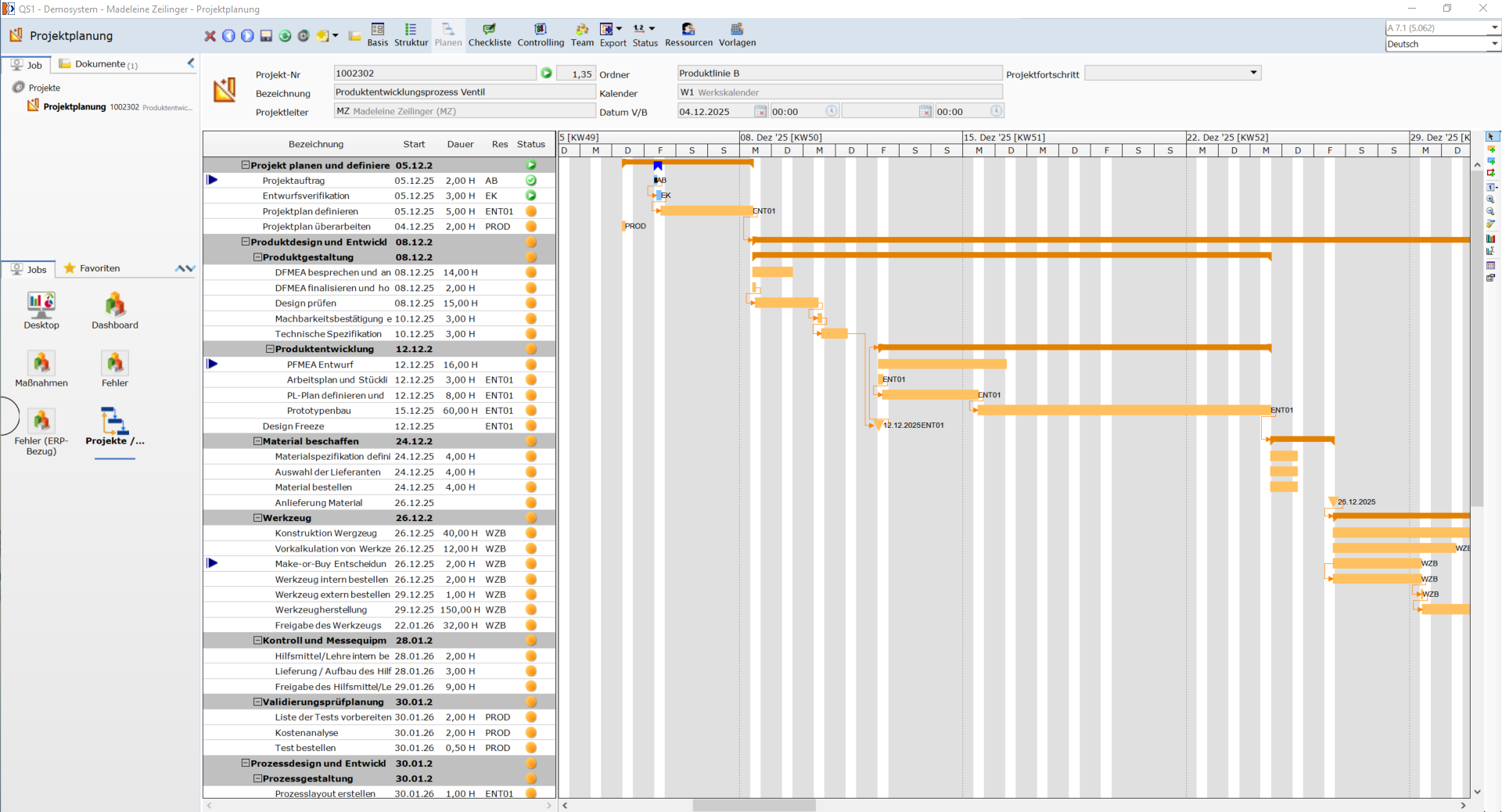
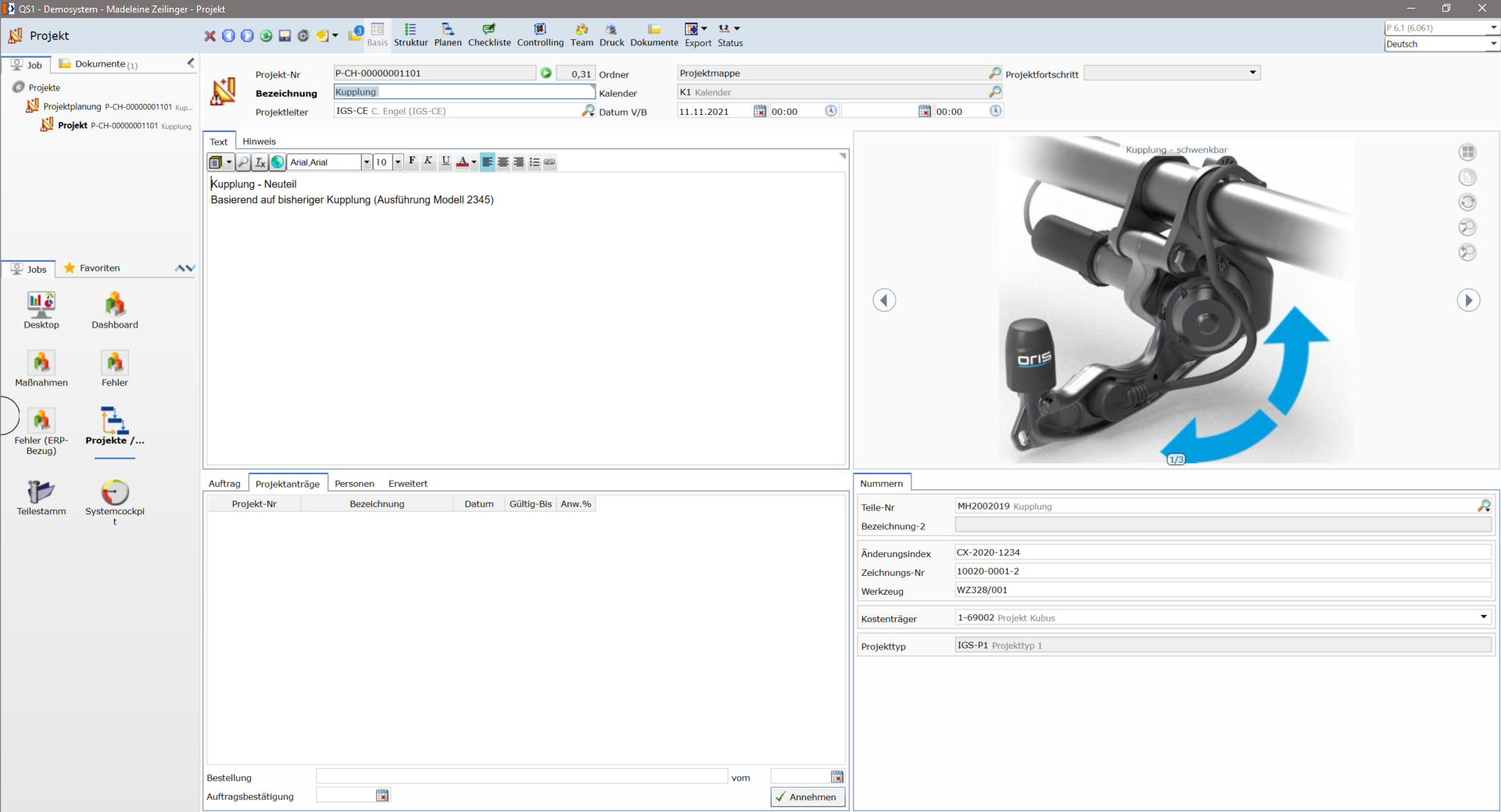
Create standards-compliant project plans that fully map all phases of the APQP process – from planning and product and process development to validation and series production release. Individual project structures, sub-projects, and interconnected process chains can be flexibly designed and precisely tailored to your customer requirements.
Integrated Gantt charts ensure maximum transparency across all maturity levels, milestones, and safeguards, supporting you in managing projects safely and on schedule until they reach series production readiness.g and monitoring.
- APQP-compliant project structure: Consistent mapping of all APQP phases according to AIAG & VDA
- Focus on maturity level assurance: Systematic monitoring of all quality and release stages
- OEM requirements under control: Structured implementation of customer-specific specifications
- Standardized project templates: Best practices for fast and standards-compliant project launches
- Integrated milestone logic: Clear control of gate reviews and releases
- Linked quality methods: Seamless integration of FMEA, Control Plan, etc.
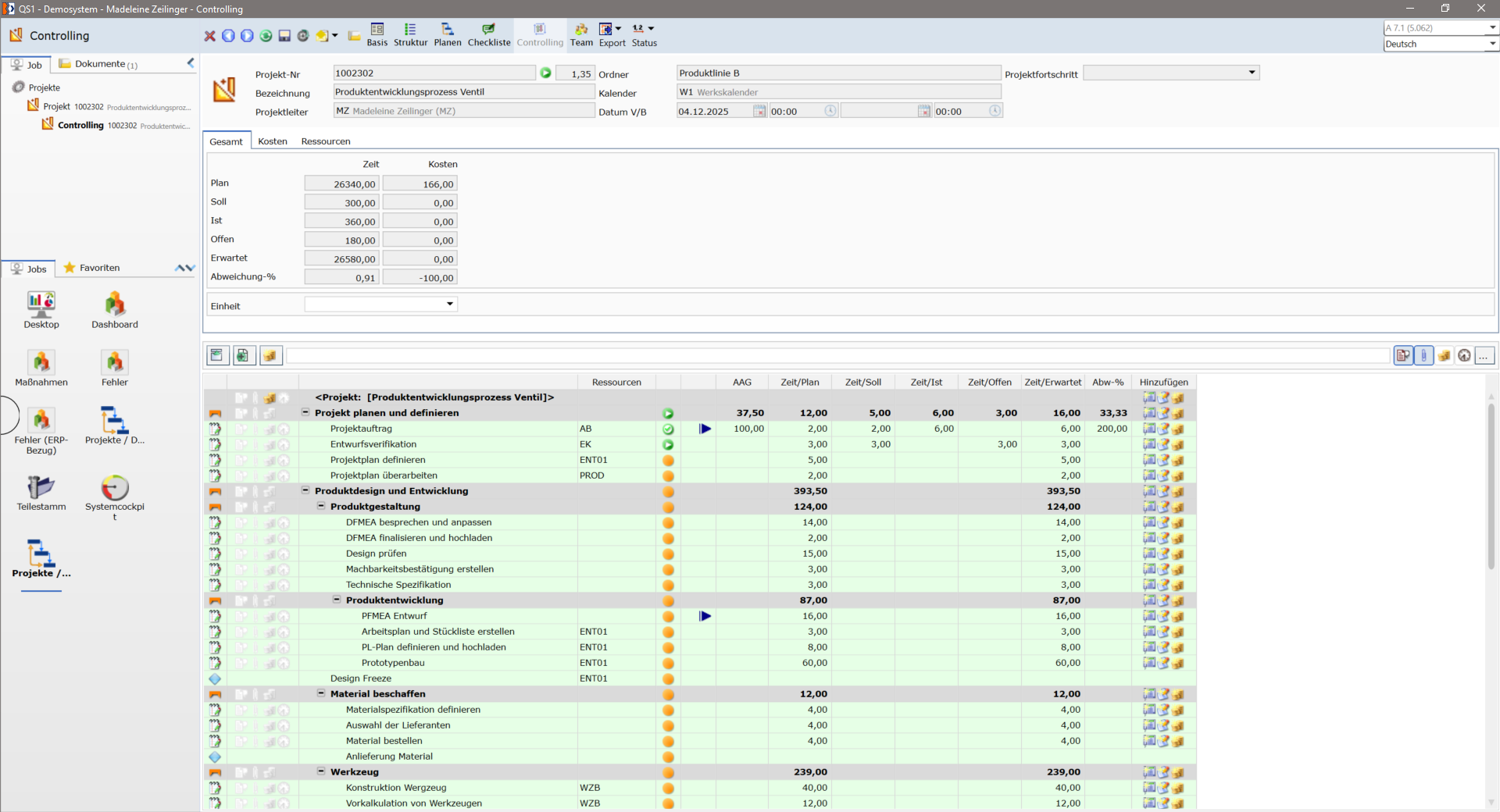
- Transparent project tracking: Gantt-based visualization of all activities
- Comprehensive documentation: Complete traceability for audits and customers
- Efficient collaboration: Clear task allocation along the entire supply chain
- Flexible project architecture: Adaptable to OEM, Tier, and internal standards
- Integrated resource management: Optimal planning in complex development projects
Does this sound familiar?
- Production readiness is determined early, but Advanced Product Quality Planning (APQP) is not consistent: Tasks, milestones, maturity levels, and documentation are scattered, so while projects run, the assurance is difficult to maintain.
- Customer-specific OEM requirements are added and change, while different standards are used internally: Without a clear structure, APQP becomes a coordination loop, not a control instrument.
- Gate reviews and approvals exist organizationally, but are not properly documented: It is not always clear whether the prerequisites are actually met and which documentation is currently valid.
- FMEA, production control plans, and other methods run in parallel: Risks are analyzed, test steps are planned, documents are created, but the connection within the project context is missing, resulting in incomplete maturity level assurance.
- Project transparency is limited: Deadlines, dependencies, and resources are managed in Gantt charts, while quality documentation and maturity levels are stored elsewhere, which slows down decision-making.
This should be achieved through a robust process
- An APQP-compliant project structure according to AIAG and VDA: All phases must be mapped, from project initiation through product and process development to validation and series production release.
- Maturity level assurance as a core principle: Quality and release levels must be systematically monitored, with gate reviews requiring clear criteria, status logic, and documentation.
- Flexible mapping of customer-specific requirements: OEM requirements and internal standards must be translatable into a uniform project architecture without reinventing the wheel for each project.
- Transparent planning and control: Milestones, dependencies, and tasks must be visible, with responsibilities clearly assigned along the supply chain.
- Comprehensive documentation: Evidence must be centrally available within the project context and archived in an audit-proof manner to ensure that audit and customer requirements can be met at any time.
Coverage in QS1
- Digitizes and structures APQP by enabling the creation of standards-compliant project plans that map all APQP phases according to AIAG and VDA and can be flexibly adapted to customer-specific requirements.
- Supports individual project structures, sub-projects, and interconnected process chains, ensuring consistent mapping of OEM, Tier, and internal standards.
- Focuses on maturity level assurance by systematically monitoring quality and release stages and clearly managing milestone logic, gate reviews, and/or releases.
- Provides integrated Gantt charts that create transparency regarding maturity levels, milestones, and assurance measures, supporting on-time management up to series production readiness.
- Links quality methods within the project context, utilizing FMEA and the production control plan as integrated building blocks for assurance, enabling the interaction of risks, inspection steps, and releases.
- Supports efficient collaboration through clear task allocation along the supply chain and complements project management with integrated resource management, creating planning certainty in complex development projects.
- Ensures traceability through consistent documentation, with document management supporting the central storage and versioning of project evidence.
Your result: APQP, which not only documents but also controls, with clear maturity level assurance, reliable gate reviews, structured fulfillment of OEM requirements, transparent project tracking and auditable documentation up to secure series release and PPAP preparation.
Your Advantages
- Standards compliance at the touch of a button: Meeting AIAG and VDA requirements without additional effort
- Reliable series production releases: Structured preparation for PPAP and customer approvals
- Reduced project risk: Early detection and targeted management of deviations
- Accelerated development processes: Standardized workflows for shorter time-to-market
- Maximum transparency: Clear overview of maturity levels and project status at all times
- Audit readiness guaranteed: Complete documentation for internal and external audits
- Efficient collaboration: Uniform database for all participants in the APQP process
- Optimal resource utilization: Precise planning and management of complex project landscapes
