
Challenges in practice
A continuous, quality-assured flow of goods is a key component of comprehensive quality management. However, incoming goods inspection often generates significant internal costs for ensuring supplier deliveries. Inspections are repeated in their entirety, documents are filed manually, and quality certificates are requested separately.
This not only leads to additional costs but also to delays in the flow of materials. At the same time, there is a risk of media breaks and incomplete documentation.
An effective way to minimize costs and risks is to systematically integrate the supplier's outgoing goods inspection into the company's own inspection process. This requires a digital, structured, and simple connection to the supplier – online, transparent, and without complex cloud access or cumbersome replication mechanisms.
What's needed is a solution where the supplier provides quality-relevant data in a structured manner before shipment and this data is seamlessly integrated into the internal incoming goods inspection.
Solution QS1
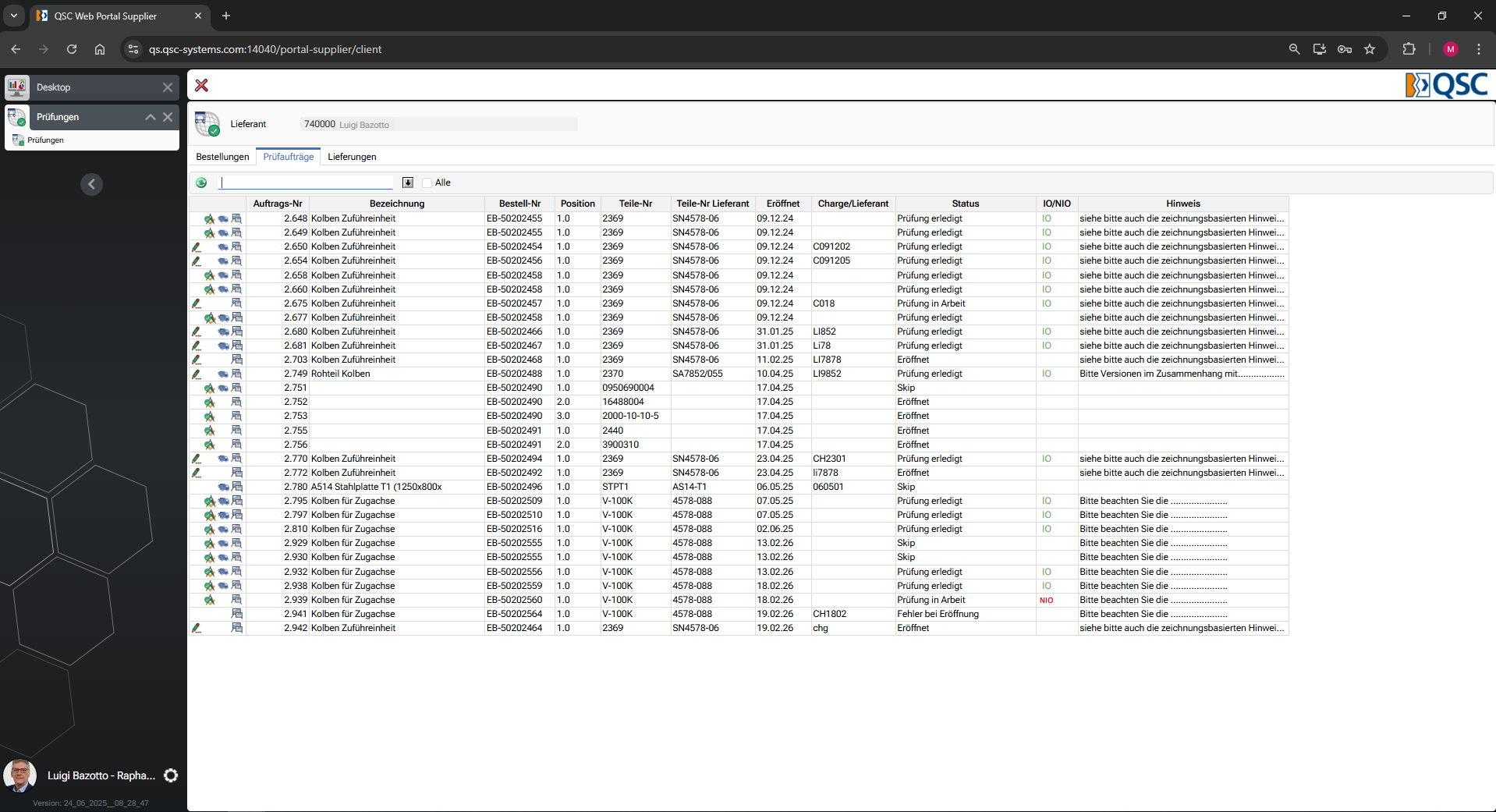
The browser-based QS1 supplier portal integrates your supplier's outgoing goods inspection into your own incoming goods inspection. Suppliers record their inspection results directly in the system and assign required documents, such as test certificates or documentation from upstream suppliers, in a structured manner.
By integrating relevant ERP data—for example, purchase orders or specific delivery items—suppliers have access to all the necessary basic information for documenting their outgoing goods. Upon actual goods receipt in your ERP system, an automatic comparison is made between the documented outgoing goods inspection and your internal goods receipt.
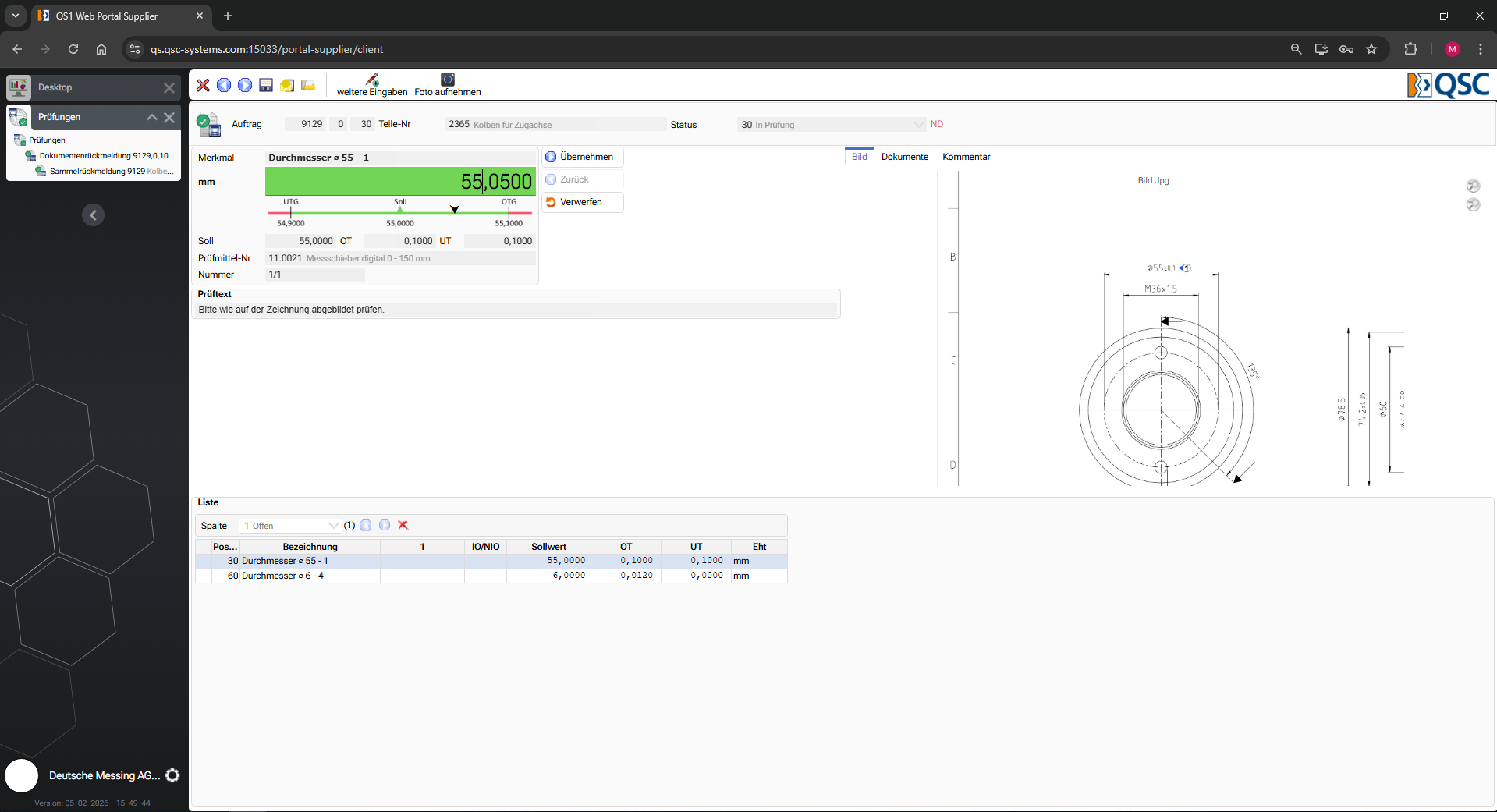
- Pre-recorded supplier outgoing goods inspection directly in the QS1 portal
- Automatic reconciliation between supplier outgoing goods and internal goods receipt
- Integration of ERP data such as purchase orders and delivery items as the basis for documentation
- Control of inspection intensity via stored inspection plans and dynamic procedures
- Direct assignment of inspection certificates and upstream supplier documentation
- Transparent "internal" and "external" view of deliveries and inspection status
- Reduction of redundant inspection efforts in goods receipt inspection
- Simple browser-based application – without installation or complex cloud mechanisms
- Digital integration of supplier inspection into your supply chain processes
Does this sound familiar?
- Supplier data is missing or unstructured, documents have to be requested, and internal checks have to be repeated, which the supplier has already done anyway.
- The flow of materials is slowed: Goods are physically present, but approvals and documentation are missing. This leads to blocked stock, queries, and delays in production and logistics.
- Documentation is inconsistent: Test certificates, acceptance protocols, and upstream supplier documentation arrive by email or as attachments, are filed manually, and are difficult to accurately assign during an audit.
- Media breaks create risks: Manual transfers and parallel filing lead to gaps, incorrect versions, or missing documentation, even though the delivery quality was actually good.
- You want to use supplier due diligence upstream, but without IT overhead: no complex cloud access, no installations, no error-prone replication mechanisms, while maintaining full control over audit rigor and approvals.
This should be achieved through a robust process
- Upstream, structured supplier outgoing goods inspection: The supplier must provide standardized inspection results and documents before shipment, clearly linked to the order/delivery item/shipment.
- Seamless integration into internal goods receipt: Upon goods receipt in the ERP system, automatic reconciliation must occur so that supplier data is directly available in the internal inspection process.
- Control of inspection intensity: It must be possible to define which inspections the supplier performs and how rigorously they are carried out, using inspection plans and dynamic adjustments, not relying on guesswork.
- Reduction of redundant inspection efforts: Internal quality assurance focuses on risk-relevant characteristics and cross-checks instead of repeating entire inspections.
- Audit-proof transparency for both parties: Delivery status, inspection results, documents, and approvals must be traceable and audit-proof (internally and externally).
Coverage in QS1
- Makes the supplier's outgoing goods inspection an integral part of your incoming goods inspection via the browser-based QS1 supplier portal (without installation or complex cloud mechanisms).
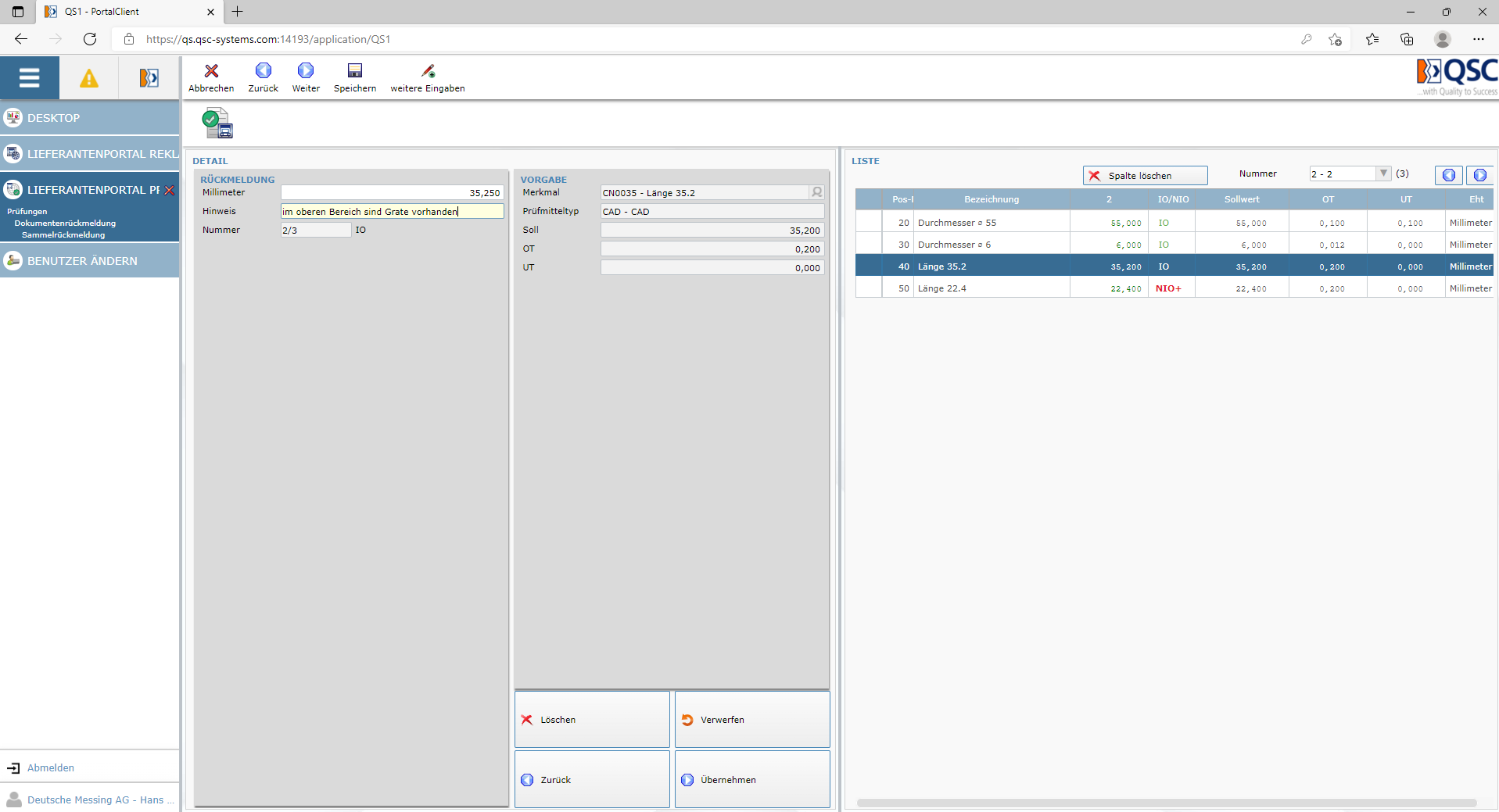
- Allows suppliers to record inspection results directly in the system and assign required documents (inspection certificates, acceptance protocols, upstream supplier documentation) in a structured manner.
- Integrates relevant ERP data such as purchase orders and delivery items, enabling suppliers to document with complete context. Upon goods receipt in the ERP system, an automatic comparison is made between the documented outgoing goods inspection and the internally posted goods receipt.
- Controls inspection intensity and scope via defined inspection plan structures and dynamic procedures: Supplier inspections become targeted, and internally, a structured cross-check is performed, focusing on essential or high-risk characteristics.
- Provides a transparent internal and external view of deliveries, inspection status, and documentation, ensuring audit-proof integration into your digital supply chain.
- Enables the direct initiation of a supplier complaint from the goods receipt process in case of deviations. The process itself is made available to the supplier via the portal (including action tracking and status overview).
Your Result: Lower internal testing costs, faster flow of goods through upstream quality assurance, higher data and documentation quality without media breaks, clear responsibilities between supplier and company, and audit-proof transparency regarding delivery quality, testing status, and evidence along the supply chain.
Your Advantages
- Reduced internal inspection costs in incoming goods inspection
- Minimized quality and delivery risks
- Accelerated flow of goods through upstream quality assurance
- Clear allocation of responsibilities between supplier and company
- Complete, structured, and audit-proof documentation
- Increased transparency regarding delivery quality and inspection status
- Faster release processes in incoming goods inspection
- Avoidance of media breaks and manual document rework
- Improved decision-making basis through complete inspection data
- Sustainable quality improvement throughout the entire supply chain
