
Challenges in practice
Standards, regulatory requirements, and industry-specific guidelines are constantly increasing. Companies today face a multitude of standards – from ISO standards and VDA requirements to GxP and EU directives. At the same time, markets, technologies, and organizational structures are changing ever more rapidly. Processes are growing, becoming more complex, and spanning numerous interfaces.
While many companies have formal process descriptions, these are often static, difficult to access, or insufficiently linked to day-to-day operations. Versions are not clearly traceable, responsibilities are unclearly defined, and changes can only be implemented with significant administrative effort. The result is a lack of transparency, a lack of clarity, and increased risks – particularly regarding compliance and auditability.
Therefore, what is needed is not just a documentation tool, but a dynamic, integrated process management system that creates transparency, minimizes risks, and systematically supports continuous improvement.
Solution QS1
Clear process structure and understandable visualization
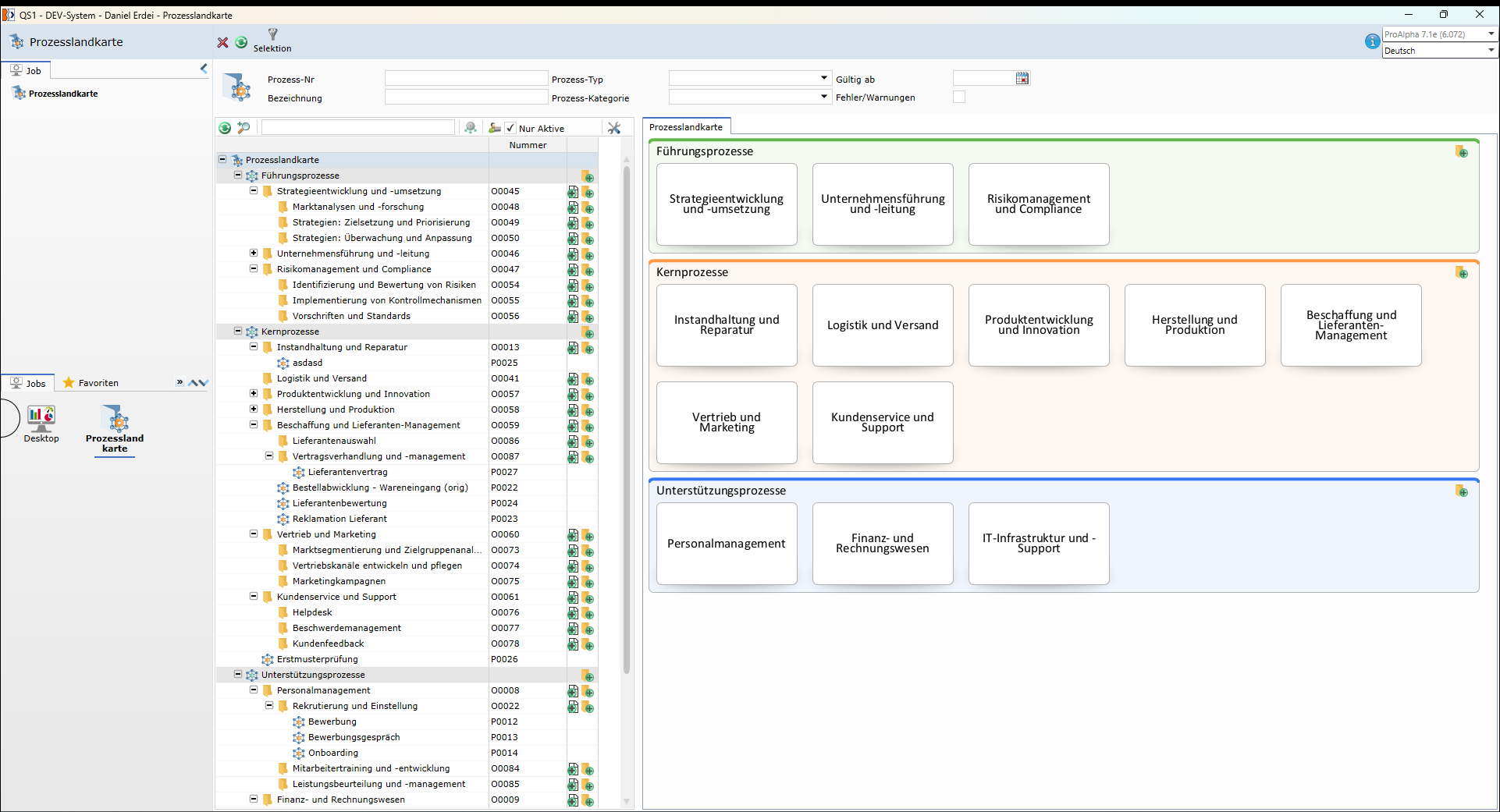
QS1 Process Management creates a transparent and traceable structure for your entire operational organization. An intuitive process map clearly structures and interconnects management, core, and support processes. Various modeling methods, such as BPMN diagrams, Turtle diagrams, and flowcharts, enable a standardized yet practical representation of complex process relationships.
This makes responsibilities, interfaces, and risks visible. Weaknesses can be specifically analyzed, and optimization potential identified early on—an essential foundation for sustainable quality improvement.

Standards-compliant control and audit-proof versioning
Modern process management must meet regulatory requirements at all times. QS1 supports you in this with end-to-end versioning, clearly defined approval processes, and an audit-proof history of all changes. Processes and associated documents are created, reviewed, approved, and published via configurable workflows.
Integrated notifications, intranet access, and optional read receipts ensure that new or modified processes actually reach the company. This creates an active, dynamic system—not just a one-time documentation, but a dynamic platform that continuously ensures auditability and compliance.

Deep integration into your management system
The unique added value arises from the close integration with other QS1 modules. Processes can be directly linked to documents, training, audits, corrective actions, and quality-relevant data. This makes process management a central component of your integrated management system.
Instead of isolated process descriptions, a seamless system landscape is created in which workflows are not only documented but also actively managed and continuously improved. The result is greater transparency, increased efficiency, and a sustainable safeguard for your competitiveness.
- Intuitive process map for a clear and structured overview of your entire workflow organization
- Standards-compliant structuring into management, core, and support processes, and more
- Easy creation and visualization of processes with the integrated QS1 Designer
- Modeling using BPMN diagrams, turtle diagrams, flowcharts, and swimlane models
- Comprehensive search and navigation functions for quick information access
- Audit-proof versioning and workflow-driven approval processes
- Provision of information and SOPs via freely configurable document control processes
- Employee engagement via intranet or mobile devices – anytime, anywhere
- Automated workflows for increased efficiency and resource optimization
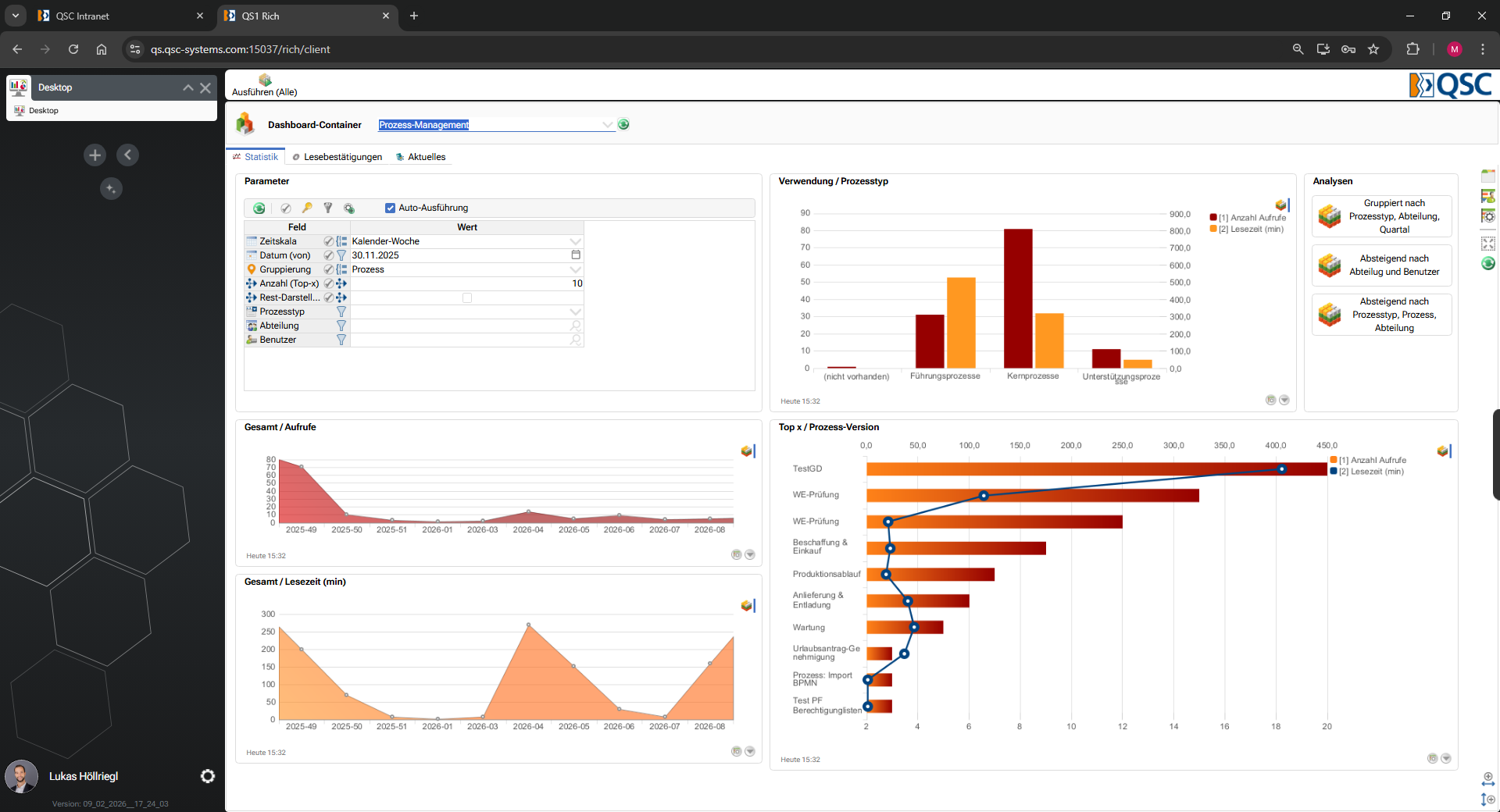
- Continuous process analysis to identify weaknesses
- Improved auditability through compliance with legal regulations and industry standards, such as in the GxP area
- Seamless integration with other QS1 modules for a comprehensive solution

Does this sound familiar?
- Process descriptions exist, but they are static, difficult to access, and disconnected from daily operations: They are "there" for audits, but hardly used in day-to-day work.
- Versions and validity periods are unclear: Employees work with different versions, changes are difficult to track, and approvals are handled informally or via email.
- Responsibilities and interfaces are not clearly defined: Processes span departments and locations, but responsibilities, handoffs, and risks remain opaque.
- Standards and regulatory requirements are increasing, while organizations and technologies are changing ever more rapidly: Processes grow and become more complex, increasing compliance and audit risks without proper management.
- Process management remains documentation rather than control: Audits, corrective actions, training, documents, and quality-relevant data are not linked to the process, so learning and improvement do not occur systematically.
This should be achieved through a robust process
- A central process map as a navigation system: clear structure for management, core, and support processes, with structured networking and fast search capabilities.
- Practical modeling and visualization: complex processes must be mappable using standardized methods (e.g., BPMN, Turtle diagrams, flowcharts, swimlanes).
- Standards-compliant control: versioning, release processes, and auditable history (including unambiguous validity) must be enforced by the system.
- Active distribution and implementation: new or modified processes must actually reach the organization (notifications, intranet/mobile access, optional read receipts).
- Integration into the management system: processes must be linked to SOPs/documents, audits, deviations, corrective actions, qualifications, and training so that process management becomes a control instrument.
Coverage in QS1
- Creates a transparent structure for the entire workflow organization via an intuitive process map, clearly outlining and interconnecting management, core, and support processes.
- Supports standardized, practical process modeling with the integrated QS1 Designer, including BPMN diagrams, Turtle diagrams, flowcharts, and swimlane models.
- Manages processes in compliance with standards through revision-proof versioning, workflow-driven approvals, and a complete history of all changes. Processes and associated documents are created, reviewed, approved, and published according to a predefined workflow.
- Ensures distribution throughout the organization through notifications, intranet access, and use via mobile devices; optional read receipts can be implemented to prevent changes from "disappearing" from the system.
- Deeply integrates processes with other QS1 components, making process management the core of an integrated management system: DMS/SOP, audit management, deviation management, corrective action management, as well as qualifications and training.
- Enables continuous analysis: Weaknesses, interface risks and optimization potentials become visible, so that process improvements can be derived based on data and systematically tracked.
Your result: A dynamic, audit-proof process management system instead of static documentation, clear versions and responsibilities, better transparency about interfaces and risks, faster and safer process changes, and an integrated management system that truly drives improvement in everyday practice.
Your Advantages
- Optimization and digitization of your business processes for greater efficiency
- Improved overview and control of process chains and workflows
- Compliance with legal regulations and industry standards for enhanced auditability
- Increased collaboration between departments and locations through process standardization
- Increased efficiency and resource optimization through process automation
- Improved product quality and fulfillment of customer requirements
- Increased transparency and traceability for improved decision-making
- Continuous process improvement for long-term business success
- Ability to adapt to changing market conditions and customer requirements
- Maximized added value through integration with other QS1 modules and functions
