
From Monitoring Gauges to a Connected Inspection Platform
Why Modern Calibration Management Extends Far Beyond Measuring Equipment
Taking a bird's-eye perspective reveals the bigger picture: In practice, production machinery, equipment, safety installations, and an extensive array of operating assets must undergo regular inspection, maintenance, or formal release. This is precisely what links them to monitoring and measuring equipment. Yet in many companies, corresponding documented information remains fragmented across disconnected, autonomous applications:
Gauges reside in CAQ software, machinery in computerized maintenance management systems (CMMS), building infrastructure in facility management tools, and further assets in disparate spreadsheets. The result is excessive search times, redundant data entry, operational inefficiency, and unnecessary complexity. This critical insight inspired the QSC developers to adopt a fundamentally new, holistic approach to calibration and equipment management.
Whether dealing with a vernier caliper, a production machine, or safety-critical equipment: From an organizational and quality standpoint, all these assets follow a comparable life cycle. They are deployed, inspected or verified, maintained, released or blocked, and must remain traceable through documented information across their entire operational life cycle.
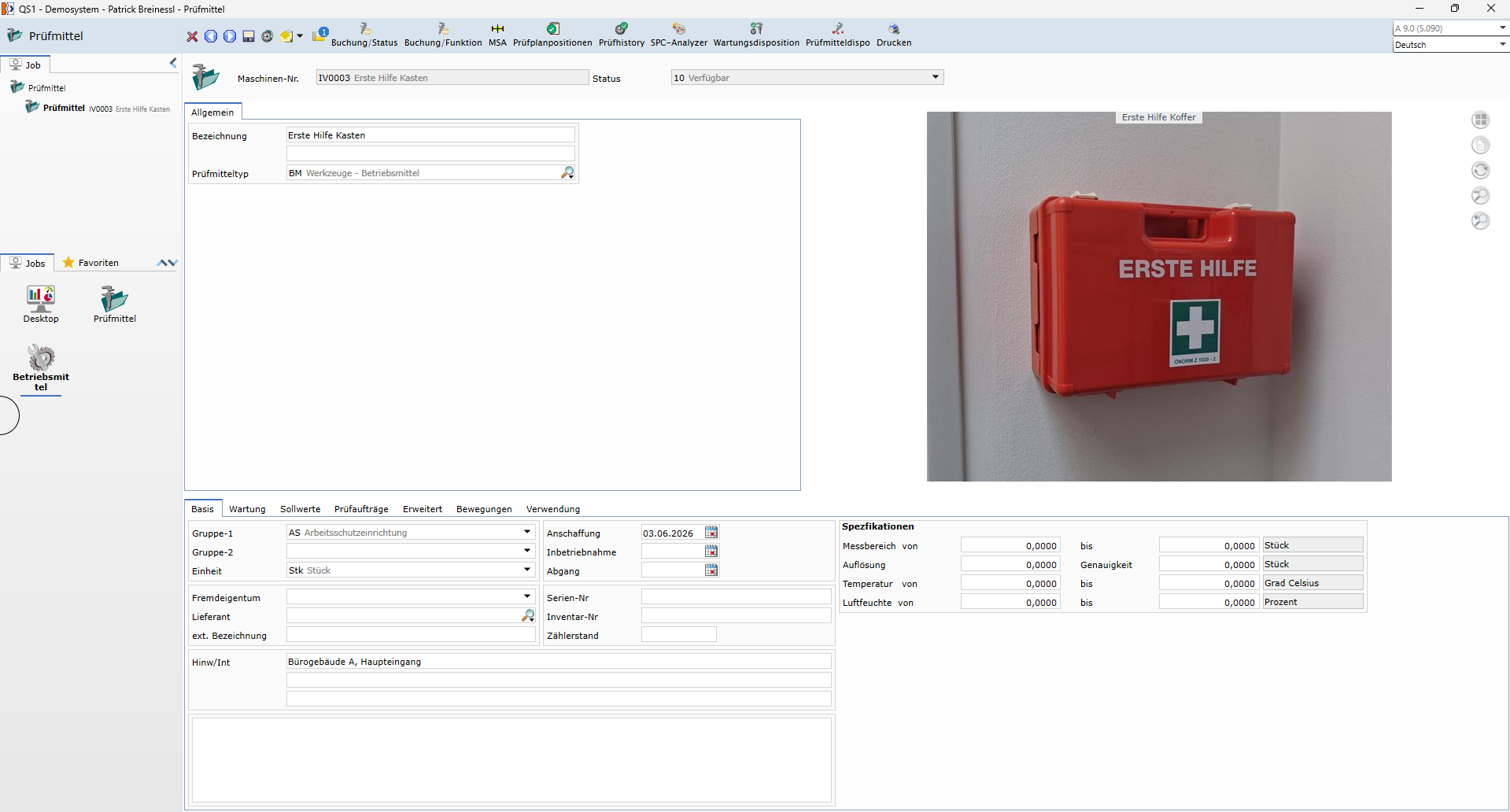
QS1 draws the logical conclusion, translates it into day-to-day operations, and expands traditional calibration management into a unified platform for all assets subject to mandatory monitoring and inspection. Alongside monitoring and measuring resources, machines, installations, fire safety equipment, industrial gates, and other assets requiring statutory or periodic inspection and maintenance can be centrally managed.
All Assets Follow the Same Core Logic
In retrospect, it is difficult to understand why these responsibilities have historically been managed in autonomous data silos. This fragmentation produces redundant data sets, diverging status logic, and mutually independent maintenance calendars. An asset may well be registered in one system, but its actual operational condition can only be determined through follow-up inquiries or by reconciling multiple applications.
QS1 eliminates this artificial divide. Customized inspection, servicing, and maintenance intervals can be defined for diverse asset categories. Monitoring is conducted on a time-based, schedule-based, or usage-dependent basis. Automated reminders and status alerts ensure that pending tasks are initiated in a timely manner, effectively preventing overdue intervals.
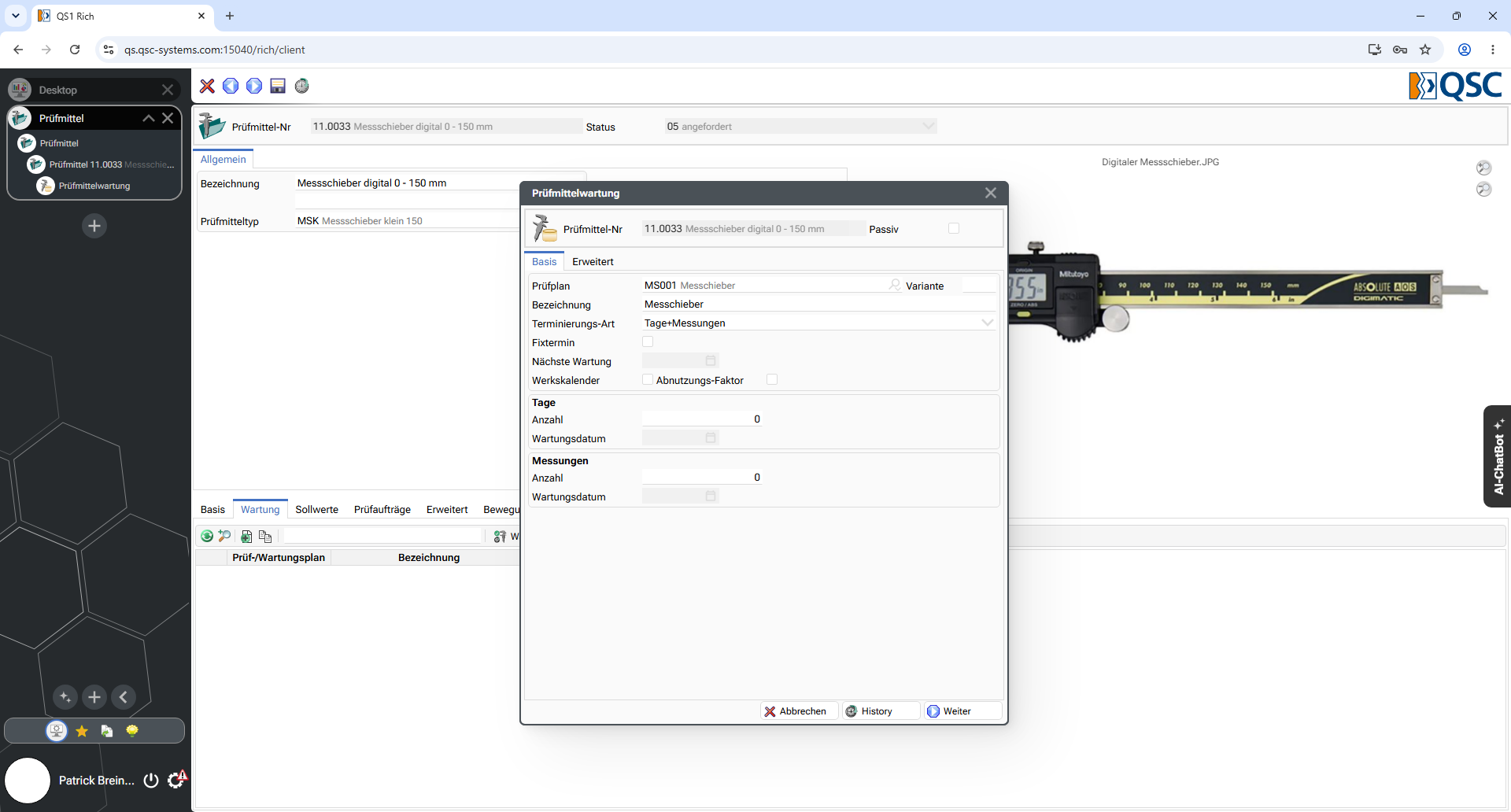
The Common Life Cycle of Monitored Assets
- Operational deployment and unique identification/allocation
- Verification, inspection, preventive maintenance, or calibration
- Release, check-out/issue, or block
- Repair, re-verification, and re-evaluation
- Historical logging and complete audit trail
In this way, the management of isolated measuring devices evolves into a standardized asset model covering all resources whose condition directly impacts quality, safety, or operational capability.
Status Must Remain Unambiguous at All Times
Decisive for day-to-day operations is a seemingly simple, yet fundamentally consequential question: Is the asset currently fit for use?
The answer must never hinge on whether an operator locates the correct spreadsheet, reads an email from an external calibration laboratory, or cross-checks data across multiple systems. Moving between different locations, undergoing external calibration, or undergoing ad-hoc repairs—all of this must remain clearly visible. It is equally critical to know where an asset is physically located and whether it is valid, overdue, quarantined, or ready for operation.
QS1 makes this information available centrally. In addition to technical specifications and areas of application, check-outs, returns, blocked locks, repairs, and inspection orders are systematically logged in the asset history. The complete usage history thus remains fully traceable and documented in an audit-proof manner.
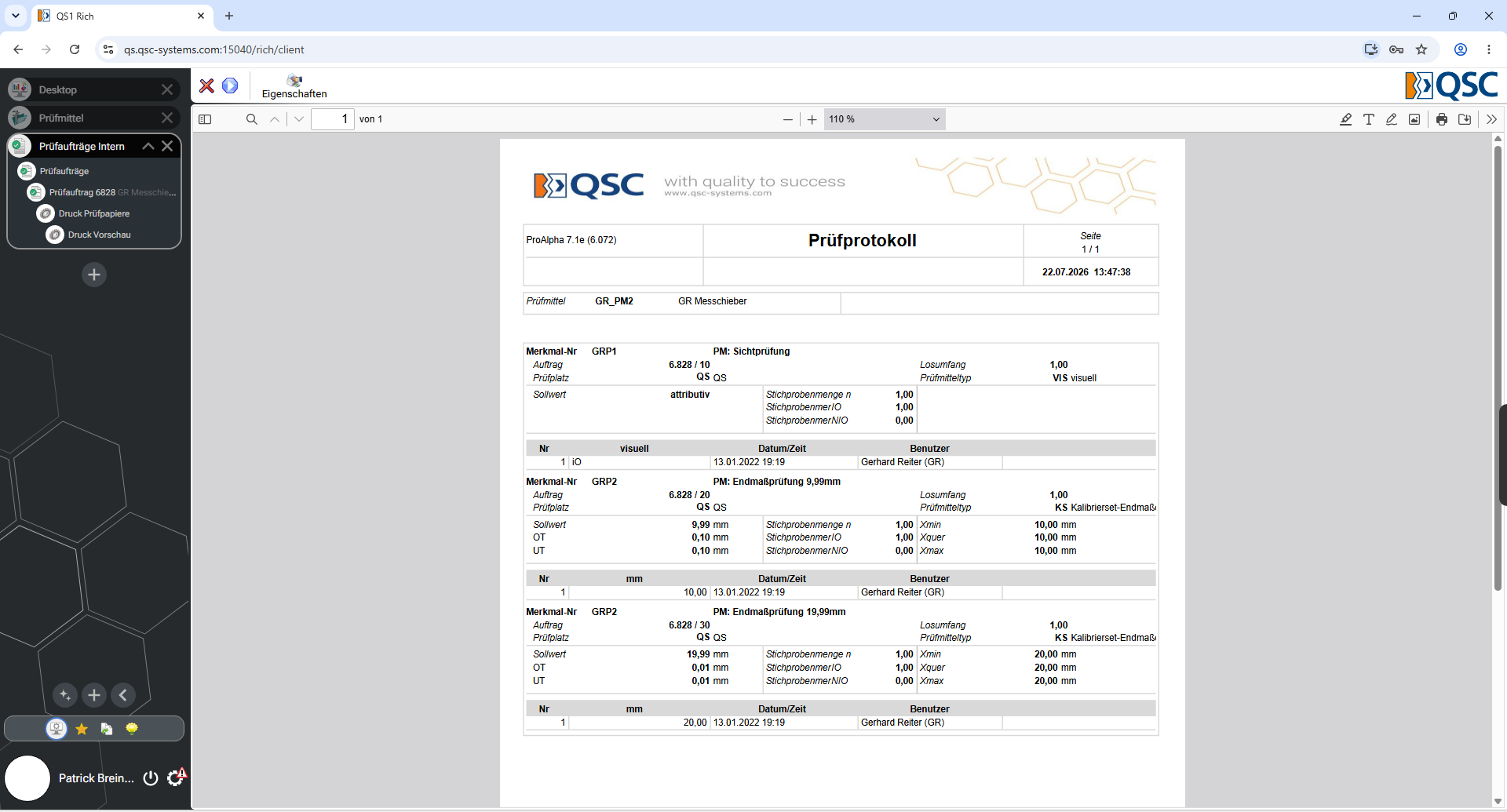
Available at a Glance:
- Current operational, inspection, or quarantine status
- Comprehensive maintenance and calibration history
- Assigned inspection intervals and service schedules
- Designated responsibilities and physical locations
- Formal releases, certificates of calibration, and documented records of conformity
- Complete change history and immutable audit trail
This significantly reduces administrative search efforts while providing a reliable foundation for evidence-based decision-making for anyone operating or overseeing inspection resources, machinery, or any other asset subject to mandatory monitoring.
Audit Readiness is Created in Daily Operations
The benefits become particularly evident during an audit. In that scenario, simply maintaining an asset on an inventory list is insufficient. The chain of evidence is what truly matters: Was the inspection resource valid at the time of use? Was the machine serviced on schedule? Which revision of an instruction applied? Was an overdue or non-conforming asset blocked in a timely manner? And which products or inspection lots could be affected in the event of a nonconformity? If this information is fragmented across disparate systems, substantial coordination effort is required. In the worst case, it remains uncertain whether a measurement result was actually produced using a valid and suitable monitoring resource.
For this reason, QS1 connects gauge measurement directly with inspection planning and quality inspection. This makes it completely traceable which measuring equipment was deployed for which inspection order and across which products, batches, or serial numbers. In the event of deviations or nonconformities, potential impacts can be contained much faster.
Measurement System Analysis (MSA) is likewise incorporated into this logic. The integrated MSA module supports preconfigured MSA and VDA methods as well as customized procedures. Suitability studies thus cease to be isolated standalone calculations and instead become an integral component of a repeatable, documented process.
Reduced Coordination, Increased Operational Reliability
- The economic benefit lies primarily in eliminating organizational friction: Deadlines do not require duplicate maintenance, status updates do not need to be compiled from conflicting tools, and documented evidence does not have to be laboriously reconstructed right before an audit.
- External calibration and service providers can also be integrated into QS1 via standardized workflows. Calibration results, certificates, and status records are fed back in a controlled manner, preventing the audit trail from breaking due to email threads or manual filing systems.
- At the same time, this establishes a unified view of all assets subject to mandatory monitoring and servicing. Responsible owners detect necessary actions early, see which items are not fit for purpose, and identify tasks that risk falling overdue. This increases operational reliability and mitigates the risk of using unreleased or non-conforming resources.
Rethinking Calibration and Equipment Management
Modern gauge management does not end with measuring tools and calibration intervals. Machines, installations, and safety-critical operating assets follow the exact same core logic: Their status must be known, their operational readiness verified, and their lifecycle history fully traceable.
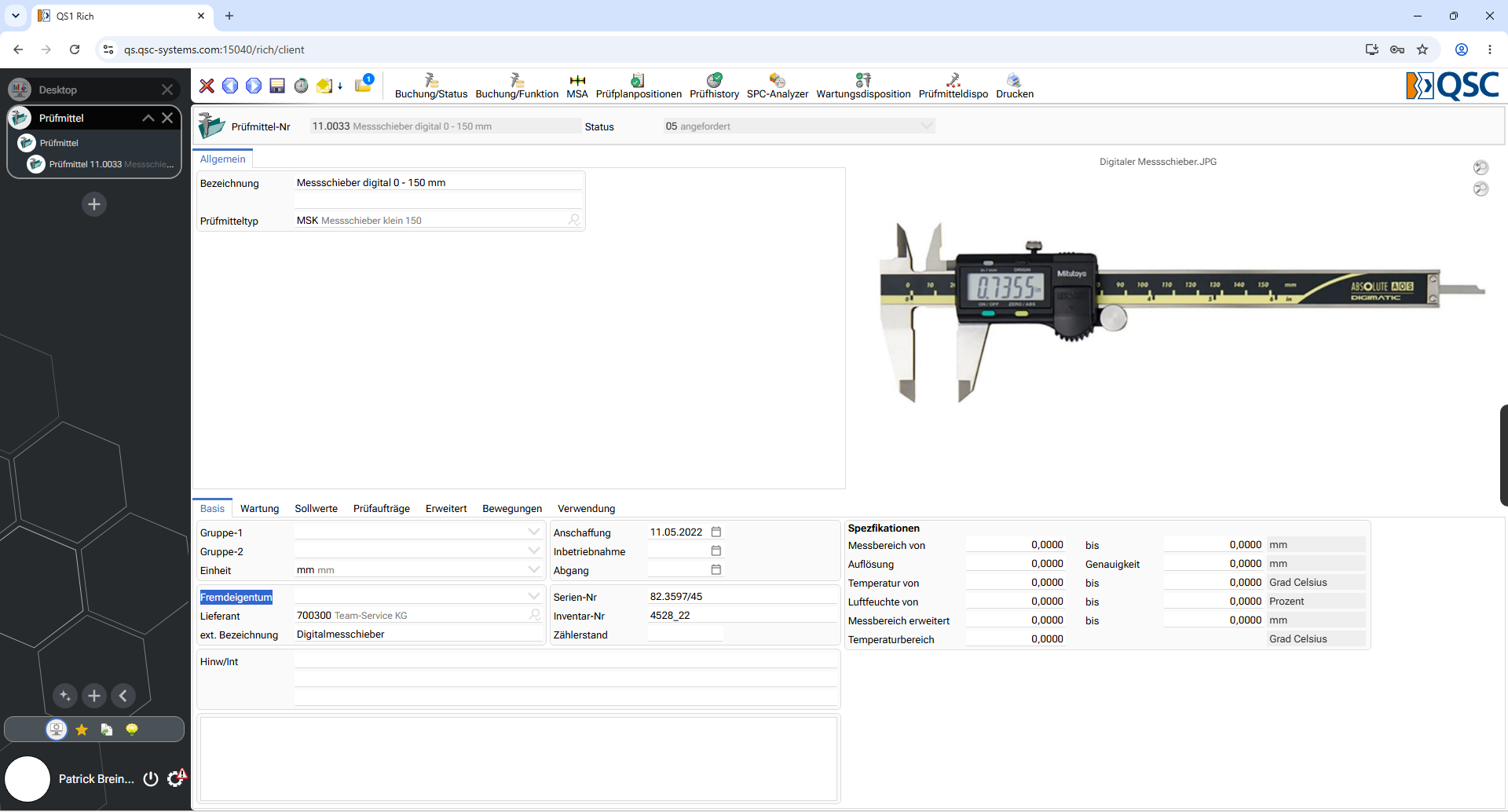
QS1 consolidates these requirements within a unified platform. Distinct management silos are replaced by a consistent asset model featuring centralized status monitoring, flexible maintenance schedules, seamless traceability, and direct integration into quality control.
Conclusion
Transitioning from isolated gauge management to a connected monitoring platform in QS1 means managing all assets subject to mandatory monitoring right where their data is needed—centrally, unambiguously, and in a fully audit-ready, operationally reliable manner at all times.
